


Technical SEO works best when it is designed into the website instead of added after launch. Developers control the URL structure, HTML semantics, internal links, rendering behavior, canonical signals, performance and much of the structured data that search engines use to understand a page.
1. Make important pages easy to crawl
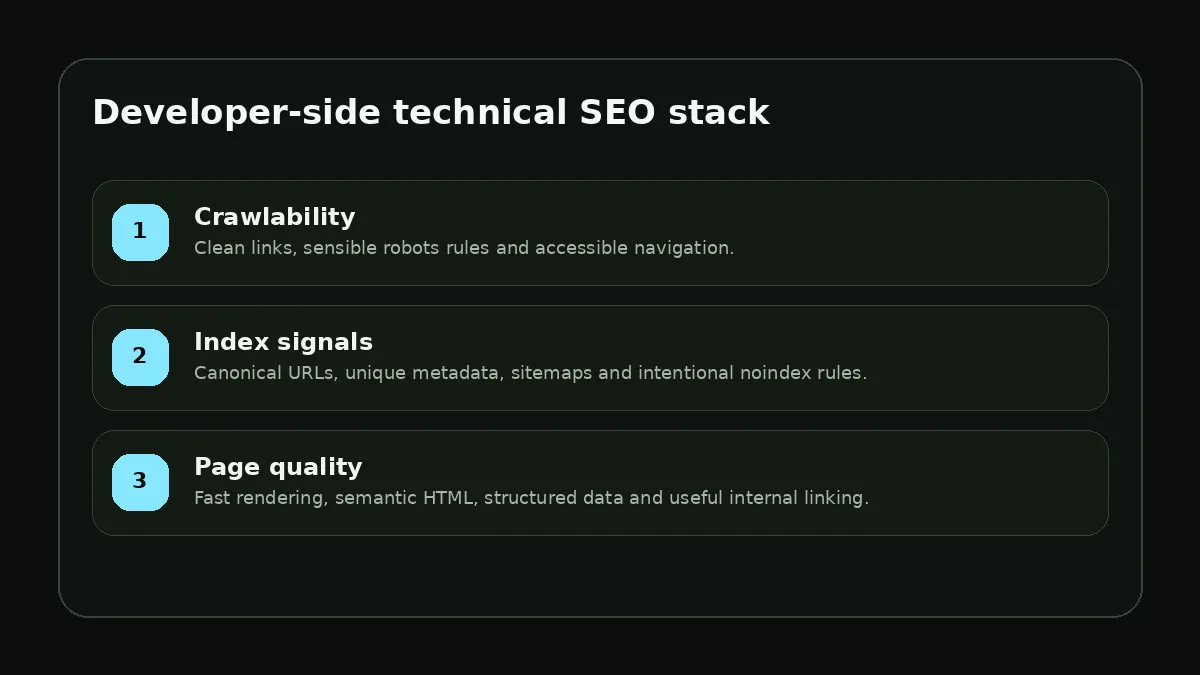
Search engines discover content primarily through links. Important pages should be reachable through normal HTML navigation rather than only through client-side interactions or search forms. Use descriptive links, avoid unnecessary redirect chains and keep the site hierarchy understandable to both people and crawlers.
A robots file can guide crawlers away from areas that should not be fetched, but it is not a substitute for proper access control. Sensitive admin pages should be protected by authentication, not by hoping a crawler will obey a robots rule.
2. Give each indexable page a clear canonical identity
A page should have one preferred URL. Use canonical tags when multiple URLs can expose substantially the same content, and keep internal links pointed at the preferred version. A sitemap should list canonical, indexable URLs—not every parameter, preview or duplicate route the application can produce.
Unique page titles and useful meta descriptions help communicate page intent, but they should reflect the visible content instead of repeating keywords mechanically. For dynamic sites, generate metadata from the same content source that renders the page so the signals stay aligned.
3. Use structured data to describe, not exaggerate
Structured data is most reliable when it mirrors information already visible on the page. An article can expose its headline, author, dates and images. A portfolio project can describe itself as a creative work. Breadcrumb structured data can reflect the navigation hierarchy.
Do not use schema as a place to add claims that the visitor cannot verify. The safest implementation is generated from real database fields and validated as part of the publishing workflow.
4. Performance and mobile usability are SEO engineering work
A slow or unstable page is a poor experience even before search engines are considered. Responsive images, reasonable font loading, limited JavaScript, efficient server queries and stable layout dimensions all improve the product itself. Technical SEO benefits because the page becomes easier to render and use.
- Serve appropriately sized images instead of oversized originals
- Reserve dimensions for media so the layout does not jump while loading
- Keep critical content in semantic HTML
- Test navigation, forms and important content at narrow mobile widths
- Monitor broken links and server errors after deployments
Technical SEO is a system
The strongest implementations are boring in a good way: one URL per page, predictable HTML, consistent metadata, crawlable links and a fast response. When these signals are generated from the application rather than manually patched page by page, SEO becomes easier to maintain as the website grows.